Naš tim s ponosom nudi jamstvo vremena i jamstvo proizvoda za zadovoljstvo kupaca.
Pročitajte više
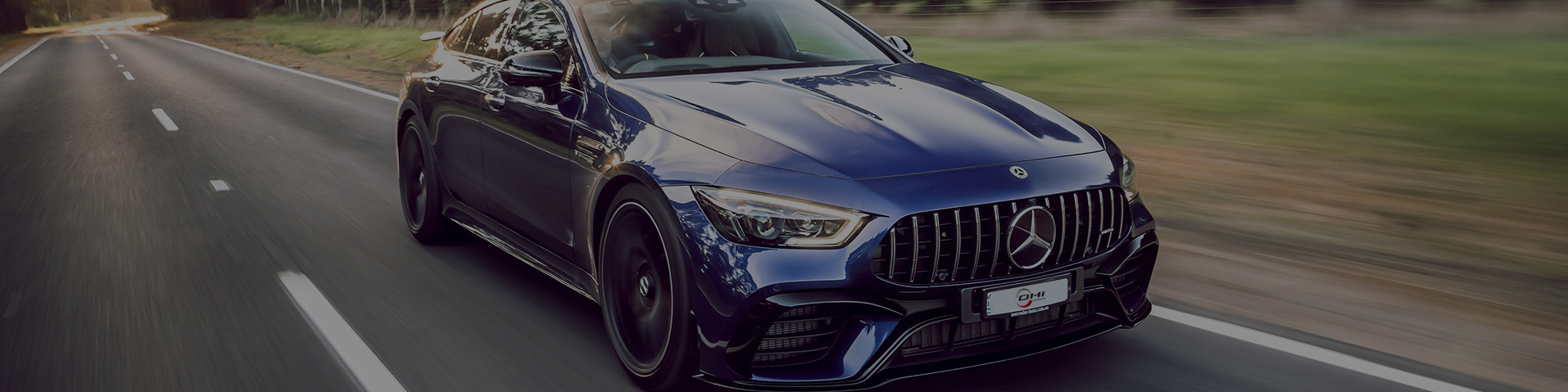
For automotive wholesalers, Mercedes Benz owners, and export buyers, choosing between aftermarket Mercedes Benz bodykits and factory AMG Line components is a decision that affects vehicle aesthetics, aerodynamics, and overall value. Factory AMG Line offers a sportier appearance than standard Mercedes models, but it comes with premium pricing and limited design variation. Mercedes Benz Bodykit aftermarket components provide an alternative that expands design possibilities, often at more accessible price points while maintaining quality standards. Understanding the differences between these options helps buyers select the right bodykit for specific applications, from daily drivers to show vehicles.
Factory AMG Line components are designed and manufactured by Mercedes Benz or its authorized suppliers. These parts guarantee perfect fitment, paint matching, and compliance with all safety regulations. However, factory components are expensive, sometimes costing several thousand dollars per bumper. Additionally, the design selection is limited to what Mercedes Benz offers for each model year. Aftermarket bodykits, by contrast, offer dozens of design options for each Mercedes model, ranging from subtle lip kits to aggressive widebody conversions. The following table summarizes the key differences between factory AMG Line and premium aftermarket bodykits.
| Performance Indicator | Mercedes Benz Bodykit Aftermarket | Factory AMG Line |
|---|---|---|
| Design Variety | High dozens of options per model | Limited one or two styles |
| Price Point | Moderate 30 to 50 percent less than factory | Premium very high |
| Material Quality | ABS, PU, Carbon Fiber options | Standard PP with primer |
| Fitment Precision | Good to excellent with quality manufacturing | Perfect guaranteed |
| Installation Complexity | Moderate may require adjustment | Direct bolt on |
| Warranty Coverage | Manufacturer dependent typically 1 to 2 years | Full factory warranty |
Industry experience confirms that quality Mercedes Benz bodykits from established manufacturers offer fitment approaching factory standards while providing superior design variety. For Mercedes owners seeking to personalize their vehicles beyond the limitations of factory AMG Line offerings, aftermarket bodykits represent the most effective solution.
The material used in Mercedes Benz Bodykit components directly impacts durability, weight, installation ease, and final appearance. Three primary materials dominate the premium segment of the aftermarket bodykit industry, each with distinct advantages for different Mercedes models and usage patterns.
ABS plastic is the most common material for mid range to premium Mercedes bodykits. ABS offers excellent impact resistance for daily driving, moderate flexibility to absorb minor bumps without cracking, and a smooth surface finish that accepts paint beautifully. ABS bodykits are lighter than factory bumpers and resist deformation under normal use. For Mercedes models such as the C Class, E Class, and GLC, ABS provides an optimal balance of cost and performance. The material performs well in moderate climates but can become brittle in extreme cold conditions below minus 20 degrees Celsius.
Polyurethane is the premium choice for Mercedes bodykits where maximum durability is required. This material is flexible, impact resistant to an exceptional degree, and nearly unbreakable under normal driving conditions. Polyurethane bodykits bounce back from minor impacts that would crack fiberglass or even ABS components. The material also accepts paint excellently and maintains its shape over many years of use. Drawbacks include higher cost, slightly heavier weight compared to ABS, and more complex manufacturing that can lead to longer production lead times. For Mercedes owners who park on city streets or drive in areas with poor road conditions, polyurethane is strongly recommended.
Carbon fiber represents the ultimate material for Mercedes bodykits aimed at show cars and performance applications. Carbon fiber components are extremely lightweight, often 50 to 70 percent lighter than ABS equivalents. The material is very rigid, providing structural benefits at high speeds. The visual appearance of exposed carbon fiber weave is highly desirable among enthusiasts. However, carbon fiber is expensive, typically two to three times the cost of ABS. It is also brittle and can crack upon impact. For Mercedes AMG models destined for track use or car shows, carbon fiber bodykits offer unmatched weight savings and visual impact. For daily drivers, ABS or polyurethane are more practical choices.
Mercedes Benz offers an extensive model lineup, each with unique design languages, mounting points, and proportions. Quality Mercedes Benz Bodykit manufacturers maintain model specific tooling and design files to ensure proper fitment and aesthetic harmony with each vehicle's existing lines.
For the Mercedes C Class W205 and W206 generations, bodykits typically focus on enhancing the vehicle's sporty character. Popular options include front lips that extend the lower bumper line, side skirt extensions that lower the visual profile, and rear diffusers that frame exhaust outlets. For C43 and C63 AMG models, more aggressive designs including larger air intakes, canards, and rear wings are available. The C Class responds well to bodykit modifications because its proportions are already athletic; the right kit emphasizes this inherent sportiness.
The Mercedes E Class W213 and W214 serve as executive sedans with a more restrained design language. Bodykits for E Class models tend to be more subtle, focusing on enhancing rather than transforming the vehicle's appearance. Front splitters, subtle rear lip spoilers, and side skirt blades add visual interest without compromising the car's professional character. For E53 and E63 AMG variants, more aggressive designs are appropriate and popular among enthusiasts who want to distinguish their high performance sedans from standard models.
The Mercedes S Class represents the pinnacle of Mercedes luxury. Bodykits for S Class models are rare and typically very subtle, limited to front lip spoilers and rear diffuser accents. The design philosophy for S Class bodykits is enhancement without disruption of the vehicle's elegant lines. Buyers should be cautious with aggressive S Class bodykits, as they can appear incongruous with the vehicle's luxury positioning. For Maybach versions, bodykit modifications are generally not recommended due to the vehicle's exclusive positioning.
For Mercedes SUVs including the GLC, GLE, and GLS, bodykits serve both aesthetic and functional purposes. Front lower spoilers add a sporty appearance while protecting the lower bumper from parking curb damage. Side steps or rocker panel covers provide easier entry and exit while adding visual mass. Rear diffusers with integrated exhaust tips complete the performance SUV appearance. The Mercedes G Class, with its boxy, iconic design, has a dedicated aftermarket including widebody kits, carbon fiber fender flares, and roof spoilers that transform the vehicle's appearance while respecting its heritage.
Beyond visual enhancement, well engineered Mercedes Benz Bodykit components can meaningfully affect vehicle aerodynamics, particularly at German highway speeds where Mercedes vehicles are designed to excel. Factory Mercedes bodies are already aerodynamically efficient, but aftermarket components can further reduce lift, decrease drag, and improve cooling airflow.
Front lips and lower spoilers reduce airflow under the vehicle, decreasing front axle lift at speeds above 130 kilometers per hour or 80 miles per hour. This improves steering feel and straight line stability, particularly noticeable in crosswinds on highways. For Mercedes models with air suspension that lowers at speed, front lips can create a cohesive aerodynamic profile that enhances stability. Side skirts manage airflow along the vehicle's flanks, reducing turbulence that creates drag and noise. Rear diffusers accelerate air exiting from under the vehicle, creating a low pressure area that improves rear stability and reduces lift.
For Mercedes AMG models with high performance cooling requirements, bodykits can improve airflow to auxiliary coolers, oil coolers, and brake ducts. Larger front air intakes and vented side panels allow more air to reach these components, reducing temperatures during spirited driving or track use. Some premium Mercedes bodykits are developed using computational fluid dynamics to optimize cooling and downforce simultaneously. When selecting a bodykit for performance reasons, look for designs that have been validated through testing rather than purely cosmetic shapes that may actually disrupt factory airflow management.
It is important to note that aerodynamic benefits become significant only above highway speeds. For urban driving, the improvements are primarily visual rather than functional. However, for Mercedes owners who regularly drive on the Autobahn or participate in high performance driving events, a quality bodykit provides measurable stability improvements. When installing a bodykit for aerodynamic purposes, ensure that all components are properly secured and that no factory undertrays or aerodynamic elements are removed without replacement.
Proper installation is essential for achieving the appearance and durability promised by a Mercedes Benz Bodykit. Mercedes vehicles have tight factory panel gaps and precise assembly standards; any aftermarket bodykit must meet these same expectations to satisfy discerning Mercedes owners.
Quality Mercedes bodykits should include all necessary mounting hardware specific to the Mercedes model. This includes screws, clips, brackets, foam pads, and sometimes replacement grilles or mesh. Premium bodykits are designed to use existing factory mounting points, minimizing modifications to the vehicle. When evaluating bodykit suppliers, ask about included hardware and whether any cutting, drilling, or modification of the vehicle body is required. Kits that require cutting factory body panels should be approached with caution unless intended for dedicated show or race vehicles.
Paint and finish represent a significant portion of the total bodykit investment, often exceeding the cost of the kit itself for complex Mercedes paint colors. Mercedes offers dozens of paint colors including multi stage pearls, metallics, and matte finishes. Professional paint work with color matching to Mercedes factory standards requires experience and proper equipment. Some bodykit manufacturers offer pre painted options for popular Mercedes colors, reducing installation time and cost. When budgeting for a Mercedes bodykit, allocate 40 to 60 percent of the kit price for professional paint and installation.
Fitment verification before painting is a critical step that should not be skipped. Professional installers will test fit each component, identify gaps or alignment issues, and make adjustments before any paint is applied. This may involve heating ABS or polyurethane components to reshape them slightly, trimming material, or fabricating spacers to achieve Mercedes factory panel gaps of 3 to 5 millimeters. Once fitment is confirmed, components are removed, painted, and reinstalled. For Mercedes owners who demand perfection, finding an installer experienced with aftermarket bodykits is as important as selecting the right kit.
The Mercedes aftermarket includes products ranging from inexpensive, poorly fitting components to premium kits that rival factory quality. For export buyers and wholesalers, understanding quality indicators is essential for selecting reliable inventory that will satisfy Mercedes owners who have high expectations.
First, examine the material thickness and consistency. Premium Mercedes Benz Bodykit components have uniform wall thickness throughout, with no thin spots, warping, or visible sink marks. Quality kits use virgin ABS or polyurethane rather than recycled materials, which can have inconsistent properties. Second, check the flange edges where components mount to the vehicle. Quality kits have straight, clean edges that match the vehicle's contours within 1 to 2 millimeters. Third, evaluate the surface finish. Premium kits are molded in polished molds, producing components that require minimal preparation before painting. The surface should be smooth, with no pitting, orange peel, or texture variations.
Fourth, verify that the manufacturer provides model specific installation instructions with clear diagrams and hardware lists. Mercedes bodykits are complex products; the absence of detailed instructions indicates a manufacturer that does not prioritize customer success. Fifth, request fitment photos or video for the specific Mercedes model and year. Even within the same generation, Mercedes often makes mid cycle updates that affect bumper mounting points. Quality manufacturers account for these variations and can provide evidence of proper fitment for each specific model year.
Sixth, check whether the bodykit accommodates factory sensors, cameras, and lighting. Modern Mercedes vehicles are equipped with parking sensors, blind spot monitoring radar, surround view cameras, and headlight washers. A quality bodykit includes mounting locations and provisions for all of these components. Budget kits often require deleting or relocating these features, which is unacceptable for most Mercedes owners. Finally, verify that the manufacturer offers customer support and warranty coverage. Premium bodykit suppliers stand behind their products, offering replacement for manufacturing defects and providing technical support for installation questions.
For export oriented businesses distributing Mercedes Benz Bodykit components internationally, understanding regulatory requirements in target markets is essential for avoiding customs delays, fines, or product seizures. Different regions have varying regulations regarding vehicle modifications that affect Mercedes vehicles.
European Union markets have stringent regulations for vehicle modifications, particularly for components that affect vehicle dimensions or lighting. Mercedes bodykits destined for EU markets should ideally include TUV certification or materials documentation demonstrating compliance with relevant standards. Bodykits that affect lighting, such as those with integrated LED daytime running lights, require E mark certification for the lighting components. Exporters serving European customers should verify that their bodykit suppliers can provide compliance documentation specific to each EU member state's requirements.
North American markets including the United States and Canada generally have less restrictive regulations for cosmetic bodykits, provided they do not obscure lighting, license plates, or required reflectors. However, Mercedes bodykits that significantly alter vehicle dimensions may require certification of compliance with federal motor vehicle safety standards. Lighting integrated into bodykits must meet DOT or SAE standards for intensity, color, and beam pattern. Exporters serving North America should work with suppliers who can provide documentation of materials compliance, particularly for ABS and polyurethane regarding flammability and impact resistance.
Middle Eastern and Southeast Asian markets typically accept aftermarket bodykits without specific certifications, though local inspection standards vary by country. Exporters should research country specific requirements regarding ground clearance, lighting colors, and protrusion limits. Working with an established manufacturer experienced in shipping to multiple international markets simplifies compliance management through documented material specifications and product testing. For maximum flexibility, select bodykits that are designed to retain factory lighting and sensor systems, as these are the components most frequently subject to regulatory scrutiny.
For automotive wholesalers and distributors seeking to differentiate their product offerings, custom manufacturing relationships offer significant competitive advantages. Rather than selling the same Mercedes bodykits available from dozens of online retailers, buyers can develop exclusive designs that competitors cannot offer.
Custom Mercedes bodykit development begins with concept drawings or 3D CAD files. The manufacturer produces prototypes for fitment validation on actual Mercedes vehicles, then creates production molds. Customization options include unique front bumper shapes inspired by specific Mercedes design eras, side skirt profiles that integrate with factory side cameras, rear diffuser designs that accommodate quad exhaust outlets, and spoiler configurations matched to specific Mercedes trunk lid contours.
For distributors targeting specific Mercedes models such as the C Class W206, E Class W214, or S Class W223, custom development creates a defensible market position. Minimum order quantities for custom bodykits vary based on complexity and the number of components per kit, typically ranging from 30 to 100 kits. Lead times for custom development range from 60 to 120 days, depending on design complexity and mold fabrication requirements. For distributors with established sales channels and brand recognition, custom bodykits offer higher margins and reduced price competition.
Beyond complete kit customization, many distributors opt for custom packaging featuring their branding, printed installation instructions with company logos, and bundled hardware kits with branded fasteners. These value added services increase perceived product quality and simplify the customer experience. When evaluating bodykit manufacturers for custom production, request examples of previous custom work for Mercedes or other premium European brands, and ask for references from existing wholesale customers in similar markets.
For wholesale buyers and distributors, understanding the cost structure of Mercedes Benz Bodykit supply chains directly impacts profitability and competitive positioning. Factory direct purchasing from manufacturers eliminates intermediary markups, enabling better pricing for resellers and end customers.
Manufacturers that operate their own production facilities offer factory direct pricing that is typically 30 to 50 percent lower than trading companies or branded resellers. The savings come from eliminating middlemen, reducing logistics costs through direct container loading, and consolidating product development with production. Factory direct buyers also receive priority access to new product releases for latest Mercedes models and custom development services. For Mercedes bodykits, where quality and fitment are paramount, working directly with the manufacturer also ensures clear communication about specifications and quality expectations.
Trading companies often add significant margins to bodykit products, sometimes 100 percent or more above factory costs. While they may offer smaller minimum order quantities or consolidated shipping from multiple product categories, the per unit cost is substantially higher. For established distributors ordering container quantities of 100 to 300 Mercedes bodykits per shipment, the savings from factory direct purchasing exceed the convenience premium of trading companies. Additionally, direct relationships enable faster problem resolution when quality issues arise.
Additional cost factors include packaging, labeling, and export documentation. Factory direct suppliers typically offer standard packaging for Mercedes bodykits including foam padding and cartons designed to protect components during ocean freight. Custom packaging with retail ready graphics is available for a fee. Export documentation including commercial invoices, packing lists, and certificates of origin are standard services. For buyers shipping to multiple international markets, working directly with the manufacturer streamlines communication and reduces the risk of errors that occur when information passes through intermediaries.
The Mercedes ownership community is discerning, knowledgeable, and connected. For wholesalers and distributors, offering quality Mercedes Benz Bodykit components that fit correctly, install cleanly, and maintain their appearance over years of use builds a loyal customer base that returns for future projects and recommends the business to other Mercedes enthusiasts.
Quality bodykits generate positive customer experiences throughout the ownership cycle. Initial satisfaction comes from proper fitment and the transformed vehicle appearance. Long term satisfaction comes from durability, paint retention, and resistance to cracking or warping under normal use. Mercedes owners who receive a quality product are more likely to purchase additional components for other vehicles in their household, upgrade to more aggressive kits, and refer fellow owners from Mercedes car clubs and online forums.
Conversely, poor quality bodykits create negative outcomes that damage distributor reputations. Mercedes owners have high expectations and are not afraid to share negative experiences on forums, social media, and review platforms. Fitment problems increase installation costs, leading to customer frustration. Material defects such as cracking, fading, or warping generate warranty claims and negative online reviews that persist for years. Each dissatisfied Mercedes owner represents not only a lost sale but also potential negative word of mouth that reaches hundreds of other potential buyers through Mercedes enthusiast communities.
For export buyers sourcing Mercedes bodykits from established manufacturers, quality assurance systems including material testing, fitment validation on actual Mercedes vehicles, and production consistency monitoring reduce the risk of product defects. By partnering with such manufacturers, distributors can confidently offer Mercedes bodykits that build their brand reputation rather than damaging it. The slightly higher upfront cost of quality bodykits is an investment in long term business success and customer loyalty in the premium Mercedes aftermarket segment.
Question 1: Will installing a Mercedes bodykit affect my vehicle's warranty?
Answer: Installing a bodykit does not void the entire Mercedes warranty. However, warranty claims directly related to bodykit installation or components may be denied. For example, if bodykit installation causes paint damage or interferes with parking sensors, those repairs may not be covered. The factory warranty remains in effect for unmodified components. Mercedes dealerships may have varying policies regarding modified vehicles, so check with your local dealer for specific guidance.
Question 2: How long does professional installation of a Mercedes bodykit take?
Answer: Professional installation of a complete Mercedes bodykit including front bumper, side skirts, rear bumper, and spoiler typically requires three to five days. This includes initial fitment testing, any necessary adjustments, paint and finish work requiring curing time, final installation, and quality inspection. Mercedes vehicles have tight factory panel gaps that require careful work to match. DIY installation by an experienced enthusiast may take two to four weeks working evenings and weekends.
Question 3: Are polyurethane or ABS bodykits better for Mercedes daily drivers?
Answer: For Mercedes daily drivers, both ABS and polyurethane are suitable, with polyurethane offering superior impact resistance at higher cost. ABS provides excellent durability for normal driving conditions and is more affordable. Polyurethane is recommended for owners who park on busy city streets, drive in areas with poor road conditions, or want maximum durability. For most daily driving situations, quality ABS bodykits provide excellent service life and value.
Question 4: Can Mercedes bodykits be painted to match factory colors including multi stage paints?
Answer: Yes, professional auto body shops can paint bodykits to match any Mercedes factory color code, including complex multi stage pearls, metallic finishes, and matte paints. Mercedes color codes are found on the vehicle's driver door jamb or under the hood. For best results, provide the paint shop with the color code and, if possible, a sample component such as the fuel door for digital color matching. Expect some minor variation due to paint aging on the existing vehicle.
Question 5: What is the typical minimum order quantity for wholesale Mercedes bodykit purchasing?
Answer: Minimum order quantities for wholesale Mercedes bodykit purchasing vary by manufacturer and product line. For popular Mercedes models like C Class and E Class, factory direct manufacturers may offer MOQs of 10 to 30 kits. For custom developed bodykits or less common models such as S Class or GT, MOQs of 50 to 100 kits are typical. Distributors shipping full container quantities often receive volume pricing discounts. Direct factory suppliers typically offer lower MOQs than trading companies or branded distributors.
1. SAE International. (2021). Surface Vehicle Standard J2572: Vehicle Aerodynamics Terminology and Definitions. SAE International.
2. European Commission. (2024). Directive 2024/EC on Vehicle Lighting and Light Signaling Devices for Motor Vehicles. Official Journal of the European Union.
3. National Highway Traffic Safety Administration. (2023). Federal Motor Vehicle Safety Standards: Bumper and Impact Resistance Requirements. US Department of Transportation.
4. ASTM International. (2022). ASTM D638-22: Standard Test Method for Tensile Properties of Plastics. ASTM International.
5. Society of Automotive Engineers. (2022). J2021: Automotive Bodykit Installation and Quality Standards. SAE International.
Ako ste zainteresirani za naše proizvode, obratite nam se
No.280, Xincun, selo Dongjia, grad Menghe, okrug Xinbei, Changzhou, Jiangsu, Kina.
+86-13915098651
+86-18068774710
+86-18068791866
+86-519-68885718
Changzhou Xinkai Auto Parts Co., Ltd. All Rights Reserved. Prilagođeni automobilski vanjski pribor Proizvođači